Reactivation of Latent Epstein-Barr Virus: A Comparison after Exposure to Gamma, Proton, Carbon, and Iron Radiation
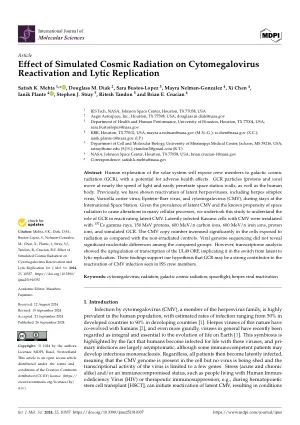
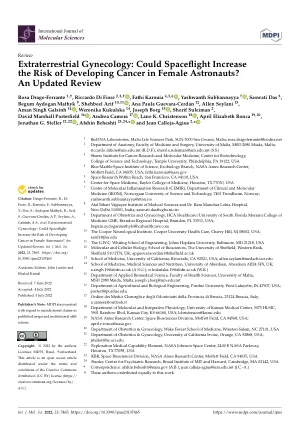
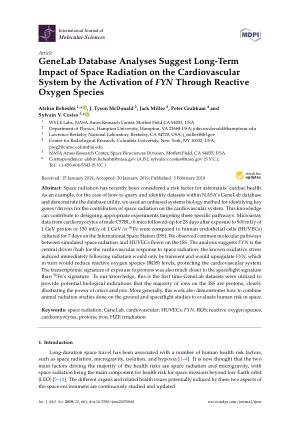
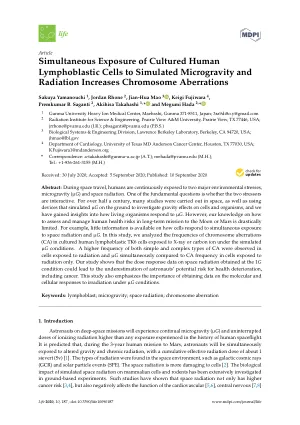
Researchers have been studying how space radiation can affect astronauts' health during their missions in outer space. One of the main concerns is that exposure to this kind of radiation might weaken an astronaut’s immune system, making them more vulnerable to diseases like those caused by herpes viruses such as Epstein-Barr Virus (EBV). To understand how much EBV DNA there could be in the bloodstream after exposure to space radiation, scientists used a special test called qPCR. This method helps them measure tiny amounts of virus present and see if they increase due to changes caused by radiation or other factors like stress from being away for long periods on missions. The study found that astronauts could indeed have higher levels of EBV in their blood after space travel, which might lead to health issues such as reactivation of the virus and potentially cause diseases if it gets out of control. This is an important discovery because understanding these risks helps us prepare better for future long-duration missions where astronauts will spend more time away from Earth's protection against radiation.
This research paper investigates the potential health effects of space radiation on astronauts with a focus on immune system impairment and reactivation of latent herpes viruses such as Epstein-Barr Virus (EBV). The study employs quantitative Polymerase Chain Reaction (qPCR) to measure the load of EBV DNA in astronauts' blood samples, which serves as a proxy for immune system health. The methodology involves collecting plasma from astronauts before and after space missions using Blood-Free Life Fluid (BALF5). The qPCR assay is designed to amplify the BALF5 gene containing EBV DNA, with a standard curve generated by serially diluting this known quantity. This allows for quantification of viral copy numbers in each sample and normalization based on total DNA content measured using NanoDrop ™ spectrophotometry. The main outcome measure is thus the number of copies of EBV per nanogram of DNA, which reflects changes in immune function due to space radiation exposure.
MLA
SK, Mehta, et al. “Reactivation of Latent Epstein-Barr Virus: A Comparison after Exposure to Gamma, Proton, Carbon, and Iron Radiation.” PubMed Central, National Center for Biotechnology Information, https://www.ncbi.nlm.nih.gov/pmc/articles/PMC6213004/. Accessed 30 Sept 2026.
Chicago
SK, Mehta, et al. “Reactivation of Latent Epstein-Barr Virus: A Comparison after Exposure to Gamma, Proton, Carbon, and Iron Radiation.” PubMed Central. 30 September 2026. https://www.ncbi.nlm.nih.gov/pmc/articles/PMC6213004/.