Effects of spaceflight on the mouse submandibular gland
- Ouchi T, Kono K, Satou R, Kurashima R, Yamaguchi K, Kimura M, Shibukawa Y
- June 26, 2024
This study explores how living without gravity, like astronauts do when they're out in space, can affect our bodies here on Earth where we have normal gravity (1g). The main focus is to understand the health risks that come with these changes. One big concern is oxidative stress from cosmic rays and mechanical strain due to weightlessness-both of which could harm astronauts' well-being over time. To get a better grasp on this, scientists are trying out artificial ways to mimic the space environment right here at home or in specialized labs. This helps them study how our bodies react and adapt when gravity is different from what we're used to-and it might even help us prepare for future long-term missions into space! In their research, scientists looked closely at saliva production because changes here could tell us a lot about the body’s response. They found that in conditions similar to microgravity (like being underwater), our bodies change how they make and release certain proteins called amylase which is important for digestion.
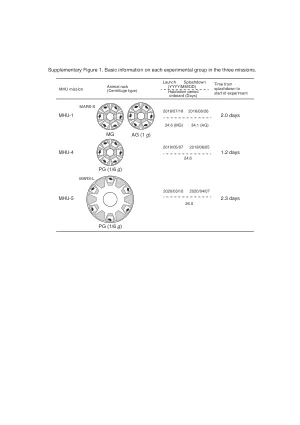
The study presented aims to understand the physiological impact of microgravity, as experienced during space travel, by examining its effects on salivary gland function in mice models. The researchers employed an artificial gravity setup using clinostats and centrifuges to simulate altered gravitational forces ranging from 1g (Earth's gravity) down to microgravity conditions akin to those found in space environments, as well as hypergravity up to three times Earth’s gravity. The methodology involved the use of clinostats and centrifuges for creating various simulated gravitational states while monitoring changes in salivary secretion function through mRNA expression levels related to amylase production-a key enzyme within this process. The study also considered circadian rhythm disruptions, which are known consequences of space travel due to altered light-dark cycles and the absence of a 24-hour day/night cycle in orbit (Otsuka et al., 2018).
MLA
T, Ouchi, et al. “Effects of spaceflight on the mouse submandibular gland.” PubMed Central, National Center for Biotechnology Information, https://www.ncbi.nlm.nih.gov/pmc/articles/PMC11233762/. Accessed 30 Sept 2026.
Chicago
T, Ouchi, et al. “Effects of spaceflight on the mouse submandibular gland.” PubMed Central. 30 September 2026. https://www.ncbi.nlm.nih.gov/pmc/articles/PMC11233762/.