Microfluidic Device for Studying Nematodes
- Jhaveri NS, Mastronardo MK, Collins JB, Andersen EC
- April 24, 2025
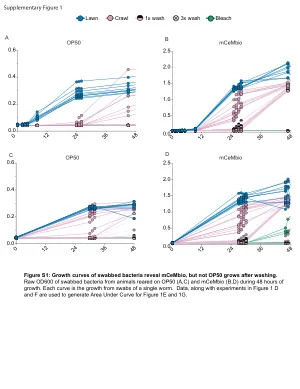
This research paper explores a new method for studying nematodes called Caenorhabditis elegans (C. elegans), which are tiny worms often used in scientific experiments because they're easy to grow and study genetically. The main focus of the work is on how these scientists can collect young C. elegans, known as G1 embryos, without harming them by using a special technique that doesn't involve bleach or other harsh chemicals. To do this safely, researchers use plates coated with OP50 food and wash the adult worms off to keep only the young ones for study. This method is not just kinder but also efficient as it retains most of these embryos after a simple rinse in water-based solution (M9 buffer). This research has important implications because C. elegans are used by scientists all over the world to understand how genes work and interact, which can help us learn more about human health too.
This research paper presents a novel method for isolating embryos from Caenorhabditis elegans (C. elegans) with high purity, circumventing the need to bleach adult worms prior to harvest-a process that can be both labor-intensive and detrimental to animal health. The study's methodology involves using OP50 bacteria as a food source for C. elegans cultured on HB101 agar plates, which retain G1 embryos after washing with M9 buffer that removes adult P0 worms without harming the larvae or requiring bleaching of the animals prior to harvest. The key findings indicate a successful isolation technique where 6 cm HB101-seeded plates retain most G1 embryos after washing with M9 buffer, while OP50 seeded plates serve as an alternative food source for C. elegans cultures without the need to bleach adults prior to harvesting their eggs or larvae.
MLA
NS, Jhaveri, et al. “Microfluidic Device for Studying Nematodes.” PubMed Central, National Center for Biotechnology Information, https://www.ncbi.nlm.nih.gov/pmc/articles/PMC12021249/. Accessed 30 Sept 2026.
Chicago
NS, Jhaveri, et al. “Microfluidic Device for Studying Nematodes.” PubMed Central. 30 September 2026. https://www.ncbi.nlm.nih.gov/pmc/articles/PMC12021249/.