Metabolic model predictions enable targeted microbiome manipulation through precision prebiotics.
- Marinos G, Hamerich IK, Debray R, Obeng N, Petersen C, Taubenheim J, Zimmermann J, Blackburn D, Samuel BS, Dierking K, Franke A, Laudes M, Waschina S, Schulenburg H, Kaleta C
- January 17, 2024
This research focuses on understanding how tiny organisms, called microbes or bacteria, interact within our bodies. Scientists have discovered that some of these interactions are not always helpful and may even cause health issues like obesity. To tackle this problem, the study introduces a new concept: precision prebiotics. These special substances can help manage specific types of harmful bacteria in our gut without affecting other good microbes that we need for digestion and overall well-being. The researchers used tiny worms called Caenorhabditis elegans as a model to study these interactions because the process is similar between them, despite their differences. They created an artificial community of bacteria in this simple organism that mimics what happens inside our bodies when we consume different foods and live lifestyles. The goal was to find special compounds-precision prebiotics-that only the harmful microbes would take up, leaving beneficial ones untouched.
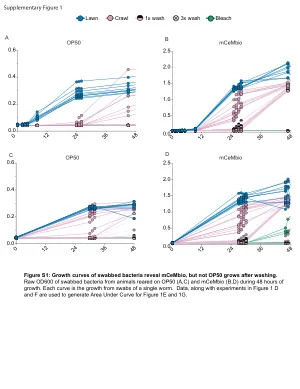
This research paper introduces a novel approach to modulate microbial interactions within specific host-microbe systems, termed "precision prebiotics." Traditional methods for influencing the composition of gut or model organism microbiomes often lack targeting and can affect non-intended species. To address this issue in Caenorhabditis elegans (C. elegans), a well-established host, researchers developed precision prebiotics aimed at selectively modulating the abundance of specific bacterial strains within its microbiome without affecting other members. The study's methodology involved creating synthetic 12-member C. elegans -specific microbiome resources (CeMbio) to facilitate research into host-microbe interactions in this model organism. The authors focused on the Gram-negative Pseudomonas lurida, a member of CeMbio's consortium that interacted with its nematode host. To predict unique uptake compounds for P.
MLA
G, Marinos, et al. “Metabolic model predictions enable targeted microbiome manipulation through precision prebiotics..” PubMed Central, National Center for Biotechnology Information, https://www.ncbi.nlm.nih.gov/pmc/articles/PMC10846184/. Accessed 30 Sept 2026.
Chicago
G, Marinos, et al. “Metabolic model predictions enable targeted microbiome manipulation through precision prebiotics..” PubMed Central. 30 September 2026. https://www.ncbi.nlm.nih.gov/pmc/articles/PMC10846184/.